
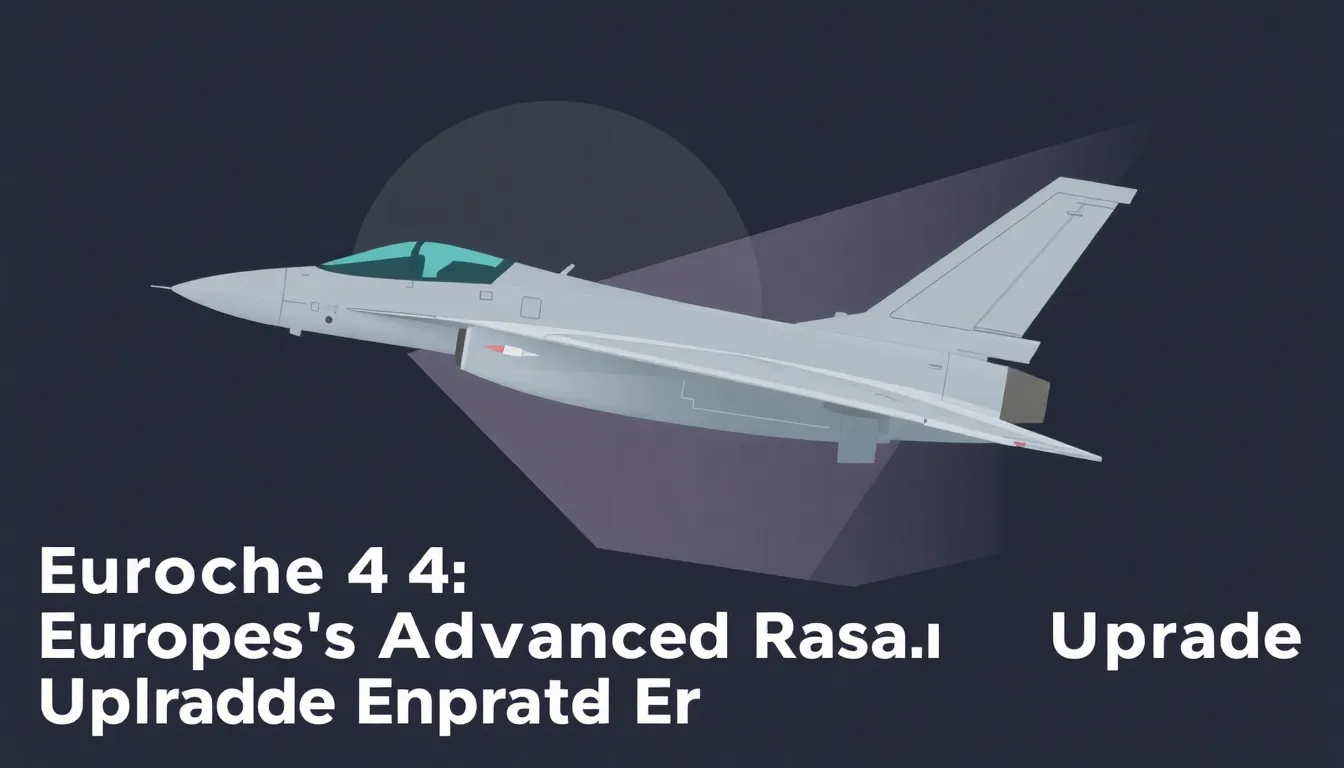
Eurofighter Tranche 4: Europe’s Advanced Radar Upgrade Explained
Next-Generation Radar Technology Transforms Fighter Capabilities
Germany’s Tranche 4 Eurofighter represents a significant leap forward in military aviation technology, with the HENSOLDT ECRS Mk 1 active electronically scanned array radar as its centerpiece innovation. This advanced radar system fundamentally changes how modern fighters operate in contested environments. Unlike traditional mechanically-scanned radar systems, AESA technology functions similarly to how a smart cooking robot manages multiple kitchen tasks simultaneously—processing multiple data streams at once rather than sequentially. The Captor-E Mk 1 system demonstrates impressive technical specifications, with capability to detect targets at extended ranges and simultaneously track numerous airborne contacts. Airbus has already conducted extensive flight testing using an A320 aircraft fitted with a Typhoon nose section, validating the radar’s real-world performance beyond theoretical projections. This hands-on testing approach ensures the technology delivers practical benefits rather than remaining confined to specifications. The radar upgrade positions the Typhoon as a competitive platform against comparable international fighters in export markets, where electronic warfare and sensor sophistication increasingly determine procurement decisions.
Production Schedule and Strategic Deployment Timeline
Germany’s procurement of 38 Tranche 4 aircraft, scheduled for delivery between 2025 and 2030, reflects a pragmatic approach to military capability development. Spain’s parallel Halcón program adds 20 additional aircraft to the broader European fleet modernization effort. These upgraded fighters serve as essential capability bridges while next-generation combat aircraft programs face extended development schedules. The United Kingdom’s separate investment in an even more advanced ECRS Mk 2 radar variant demonstrates how European nations are pursuing layered approaches to air defense modernization. This strategy resembles how a smart food processor handles multiple preparation tasks—each system optimized for specific functions while working within an integrated kitchen ecosystem. The staggered delivery timeline allows European air forces to gradually incorporate new capabilities while maintaining operational readiness. Rather than replacing entire fleets immediately, nations can manage costs and logistics by introducing advanced aircraft progressively. This measured approach acknowledges budget constraints while ensuring that aging platforms receive necessary upgrades during the critical transition period before genuinely next-generation systems become available.
Electronic Warfare and Networked Sensor Integration
The upgraded Typhoon transforms from a dedicated interceptor into a comprehensive networked sensor platform capable of simultaneous detection, tracking, and electronic warfare operations. This multitasking capability mirrors how a smart pressure cooker coordinates multiple cooking functions—heating, timing, and pressure regulation—while maintaining overall system stability. The radar system enables Typhoons to jam hostile systems while simultaneously sharing targeting information across fighter formations, creating force-multiplier effects beyond individual aircraft capabilities. This networked approach fundamentally enhances squadron-level operational effectiveness against peer competitors. The technology positions upgraded Typhoons competitively against comparable platforms like the Rafale and F-16V, particularly in export competitions where electronic warfare sophistication increasingly influences purchasing decisions. Flight testing of Germany’s first Tranche 4 aircraft is expected to commence soon, with full operational capability anticipated by the second half of this decade. For Europe’s defense industrial sector, these upgrades represent crucial proving grounds for technologies that will eventually transition to sixth-generation platforms. The success of Tranche 4 development directly influences Europe’s ability to maintain technological momentum in advanced aerospace engineering and maintain competitive positioning in global defense markets.
Source: First Tranche 4 Eurofighter Rolls Out With Advanced Radar & More Upgrades
Sophisticated radar upgrades necessitate powerful eurofighter cooking processors to efficiently manage vast amounts of real-time data.
We are a participant in the Amazon Services LLC Associates Program, an affiliate advertising program designed to provide a means for sites to earn advertising fees by advertising and linking to Amazon.com. As an Amazon Associate I earn from qualifying purchases. We also participate in other affiliate programs.