Digital Preservation Crisis: News Archives Disappearing Online
The Vanishing Digital Record
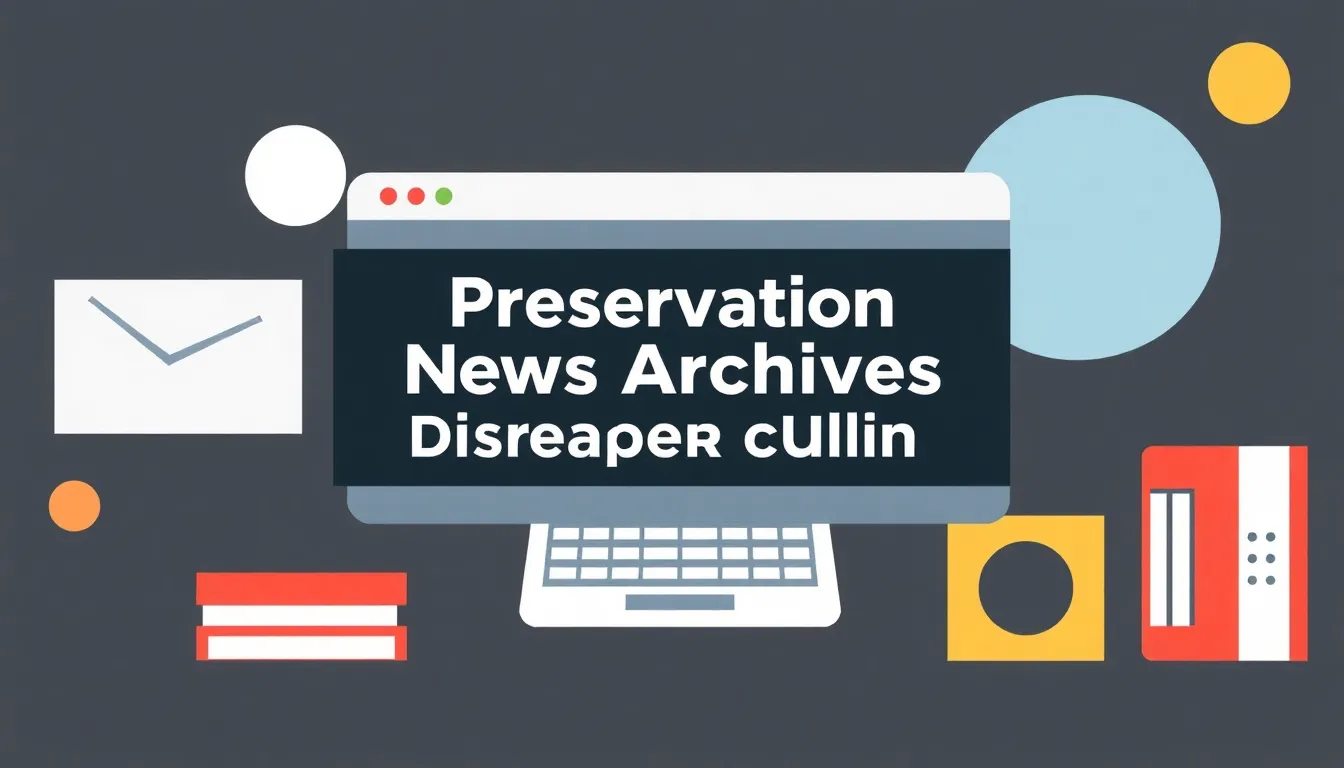
Over 340 local news outlets have begun blocking the Internet Archive’s Wayback Machine, creating an unprecedented challenge for digital preservation. This coordinated effort represents a fundamental shift in how news organizations approach their digital legacy. What started with 241 websites in January escalated to 382 by May, revealing a concerning trend across the publishing industry. Major newspaper chains, including USA Today Co. and McClatchy, are leading this movement. The underlying concern stems from anxiety about artificial intelligence companies potentially accessing archived content for training purposes. Publishers worry that even after implementing direct blocks against AI crawlers, sophisticated systems might still retrieve their work through archived versions. This defensive strategy, however, comes without concrete evidence that such unauthorized access has actually occurred. The Baltimore Banner’s chief technology officer expressed the core worry: potential misattribution of content used in AI models. This preemptive blocking represents a fundamental distrust in digital preservation principles that have served the internet community for decades.
Impact on Journalism and Accountability
The consequences extend far beyond corporate concerns about intellectual property. More than 200 journalists have signed petitions defending the Wayback Machine’s critical role in their work. Reporters in underserved communities, where local outlets have closed or become understaffed, rely heavily on archived reporting for accountability journalism. The Monroe Gazette’s B.J. Mendelson articulated this challenge clearly: without accessible archives, investigating institutional misconduct becomes exponentially harder in areas already experiencing severe news deserts. Edward McCain, a journalism librarian at the University of Missouri, emphasized that this blockade threatens one of journalism’s most effective long-term preservation mechanisms. The irony becomes apparent when examining how information access has become stratified—while public archives disappear, expensive databases like ProQuest and LexisNexis remain accessible primarily to universities and institutions. This creates a troubling two-tier system where comprehensive historical records become available only to those who can afford subscription fees, fundamentally altering democratic access to information.
Reconsidering Digital Memory and Future Solutions
The current situation raises important questions about who controls collective memory in our digital age. When news organizations fold, their archives frequently disappear entirely—The Hook’s closure resulted in 22,000 stories vanishing from public access. Meanwhile, publishers simultaneously block free preservation while maintaining commercial licensing agreements with expensive archives. This contradiction highlights a critical gap between business interests and public service. Moving forward, sustainable solutions require collaboration rather than confrontation. Publishers could implement licensing agreements with preservation organizations, ensuring their work remains accessible while protecting intellectual property rights. Transparency about AI training practices would address legitimate concerns without requiring complete archive blocking. Some news organizations demonstrate that balanced approaches work—participating in digital preservation programs while maintaining content control. The challenge involves recognizing that journalism serves democracy only when its historical record remains accessible. Rather than perpetuating expensive gatekeeping systems, the industry should explore innovative models that preserve archives, respect publisher rights, and maintain public access to the accountability reporting that strengthens communities.
Source: Why 340+ News Outlets Are Blocking History By Limiting The Internet Archive’s Access
Ensuring the longevity of all information, from critical historical accounts to simple cooking processors news, is vital.
We are a participant in the Amazon Services LLC Associates Program, an affiliate advertising program designed to provide a means for sites to earn advertising fees by advertising and linking to Amazon.com. As an Amazon Associate I earn from qualifying purchases. We also participate in other affiliate programs.